
Role of hypoxia in developing Alzheimer’s Disease
by Prof Chris Peers & Dr Natalia Nalivaeva
Brain health and activity is absolutely dependent on an adequate oxygen supply. Periods of lowered oxygen levels in the brain, a condition known as hypoxia, are clearly linked with an increased risk of dementia and Alzheimer’s Disease. Brain hypoxia can be caused by various factors, including stroke or more prolonged cardiovascular and respiratory diseases, which make those suffering from these disorders more prone to develop dementia and Alzheimer’s Disease.
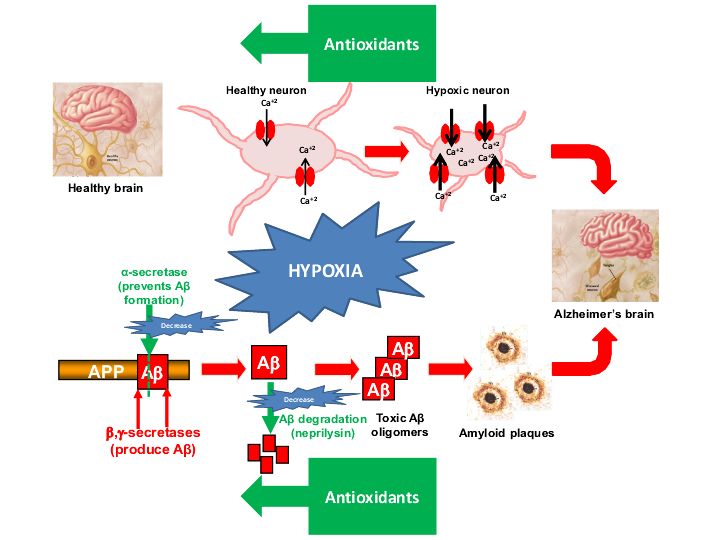
The exact mechanisms underlying this connection between hypoxia and dementia are still not fully understood. However, there are data (including work conducted at the University of Leeds) demonstrating that reduced blood supply and insufficient oxygen delivered to the brain increases the levels of Amyloid Precursor Protein (APP) and production of β-amyloid whose accumulation leads to Alzheimer’s Disease.
Researchers at the University of Leeds work on several projects aiming to find out exactly why brain cells start to accumulate β-amyloid when they do not have enough oxygen and how we can protect the brain against this damage.
A group of researchers led by Prof. Chris Peers have suggested that the underlying mechanism may involve disruption of calcium channels in neurones. Calcium channels are small holes or pores in the membrane of cells which permit the controlled entry of calcium into the cell. This process is vital to many cell functions, so when it is disrupted in hypoxia and Alzheimer’s Disease, this can be very damaging. Following hypoxia, there is a massive rise in the number of calcium channels in neurones. The process by which this happens is still being studied, but clearly involves β-amyloid. Fortunately, this process can be slowed or prevented by antioxidants found in fruit and vegetables as part of a balanced diet
Another group of researchers at Leeds, led by Prof. Tony Turner and Dr Natalia Nalivaeva, have found that hypoxia and reduced blood supply lead to decreased levels and activity of the protein neprilysin. Neprilysin is a major β-amyloid degrading enzyme and is normally important in controlling levels of brain β-amyloid. Studying the regulation of the neprilysin gene they found that neprilysin levels can be increased by antioxidants (for example, green tea extract) and some pharmacological agents, including the anti-epileptic drug valproate. Also exposure of the brain to mild hypoxia episodes has been shown to increase brain tolerance to more severe hypoxia, a mechanism called preconditioning. Such preconditioning also reduced the levels of Amyloid Precursor Protein (APP) and its degradation in the brain.
Such studies show that hypoxia is clearly a major influence on the development of Alzheimer’s Disease, but also that the brain can be protected against harmful effects of hypoxia. This information may lead to new approaches or therapies in the future. However, the most important factors which define brain health and prevent dementia still remain an active life style, not smoking, sensible drinking and a healthy diet.
Find out how periods of impaired oxygen increase the risk of dementia and what you can do to reduce your risks of dementia.